Featured Papers
Selected papers, with key points and figures.
A selection of papers that shows the character of my work. The thread running through them is a multi-timescale (MTS) framework: time treated not as a single flow but as a stack of interlocking timescales. Starting from Bergson scholarship, the work reaches into cognitive science and AI, the metaphysics of time, and the philosophy of memory — not only interpreting the texts, but building contemporary theory with them.
Is Bergsonian Freedom Not Deterministic?: Comments on Moravec’s Henri Bergson and the Philosophy of Religion
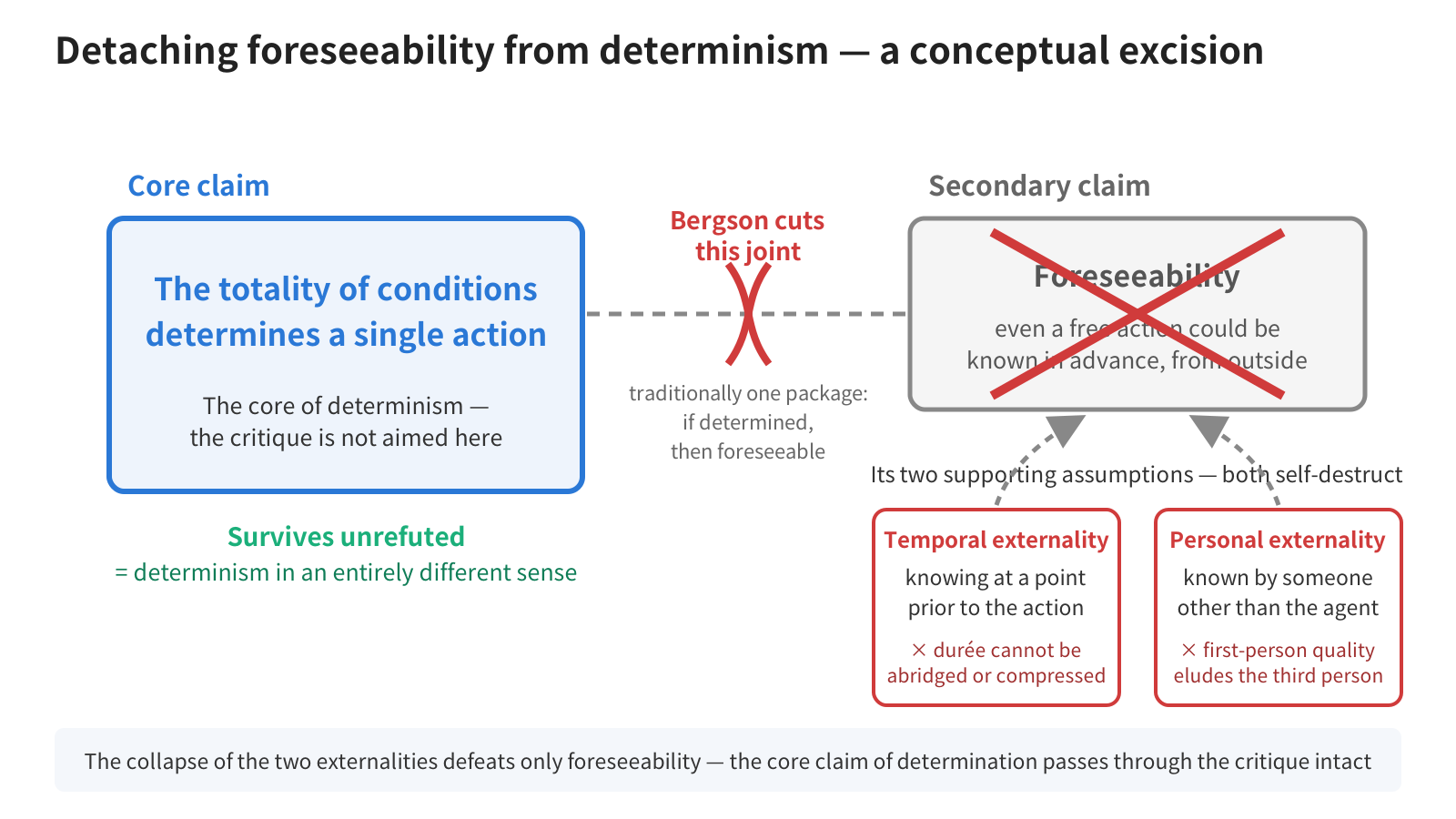
- Bergson’s theory of freedom has usually been read either as rejecting the determinism–indeterminism dichotomy altogether, or as vaguely siding with indeterminism. This commentary on Moravec’s book opens a third reading: determinism in an entirely different sense.
- First ground: free actions rooted in the deep self lack tangible reasons, but they are not reasonless accidents. They are sustained by a stronger reason — the whole of the personality, the totality of past experience — which is why the absence of reasons can be called “the best of reasons.”
- Second ground: what the foreseeability argument of Time and Free Will destroys is not the core claim of determinism but the two externality assumptions that support foreseeability — knowing at a point prior to the action (temporal externality) and knowing from outside the agent (personal externality). Breaking them yields unforeseeability, not a refutation of determinism.
- What Bergson performs, then, is a conceptual excision: foreseeability, the secondary claim, is detached from determinism, while the core claim — that the totality of conditions determines a single action — passes through the critique intact.
Transforming Memory Landscapes: An Expanded Bergsonian Approach to Temporal Structure in Media Art Experiences
Co-authored with Shigeru Kobayashi (IAMAS)
- Media-art conservation has been treated as a problem of preserving technology. But as Light on the Net (1996) shows, reproducing the original 15-second network latency today does not bring back the original experience — what must be conserved is the temporal structure of the experience, not the technical constants.
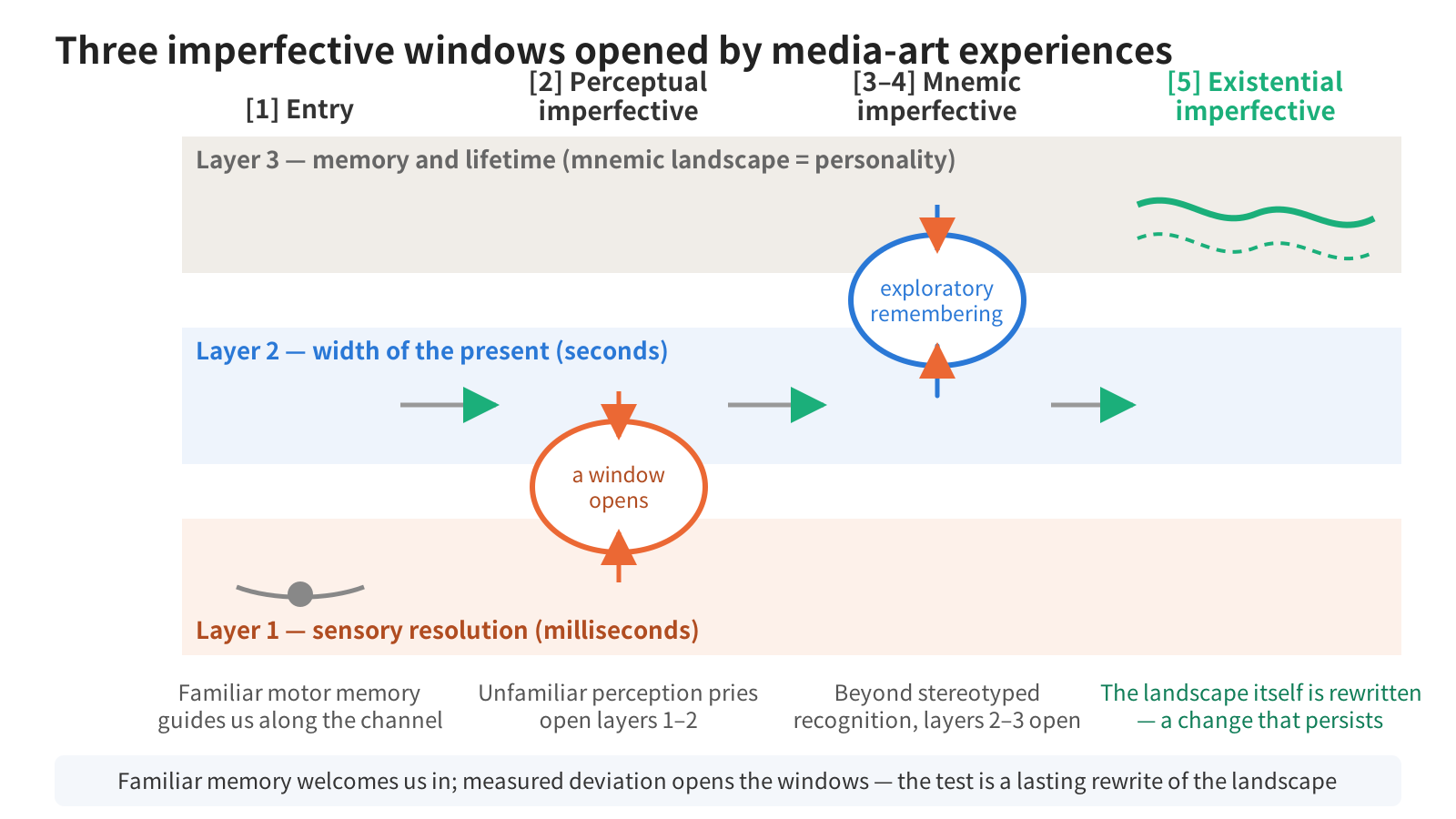
- Drawing on Bergson’s distinction between motor memory and pure memory and on the MTS interpretation, the paper proposes three imperfective windows for analyzing participants’ experience: the perceptual imperfective (layers 1–2) opened by unfamiliar perception; the mnemic imperfective (layers 2–3) of exploratory remembering beyond stereotyped recognition; and the existential imperfective — a rewriting of the landscape itself.
- Successful works welcome participants in through familiar motor memory, then open the windows by measured deviation — traced in three cases: The Legible City, Boundary Functions, and teamLab Planets.
- What makes a work unforgettable is located not in momentary novelty but in a transformation of one’s perceptual and mnemic landscapes that persists after participation — a toolkit for conserving and re-exhibiting media art.
Is Bergson’s Theory of Memory Simulationist?
- Michaelian’s simulation theory of memory and Bergson’s theory of memory have been treated as separate lineages, divided by language and method. Set side by side, they converge to a surprising degree on three core points: the constructive character of remembering, the continuity of remembering with imagining, and their differentiation by process rather than content.
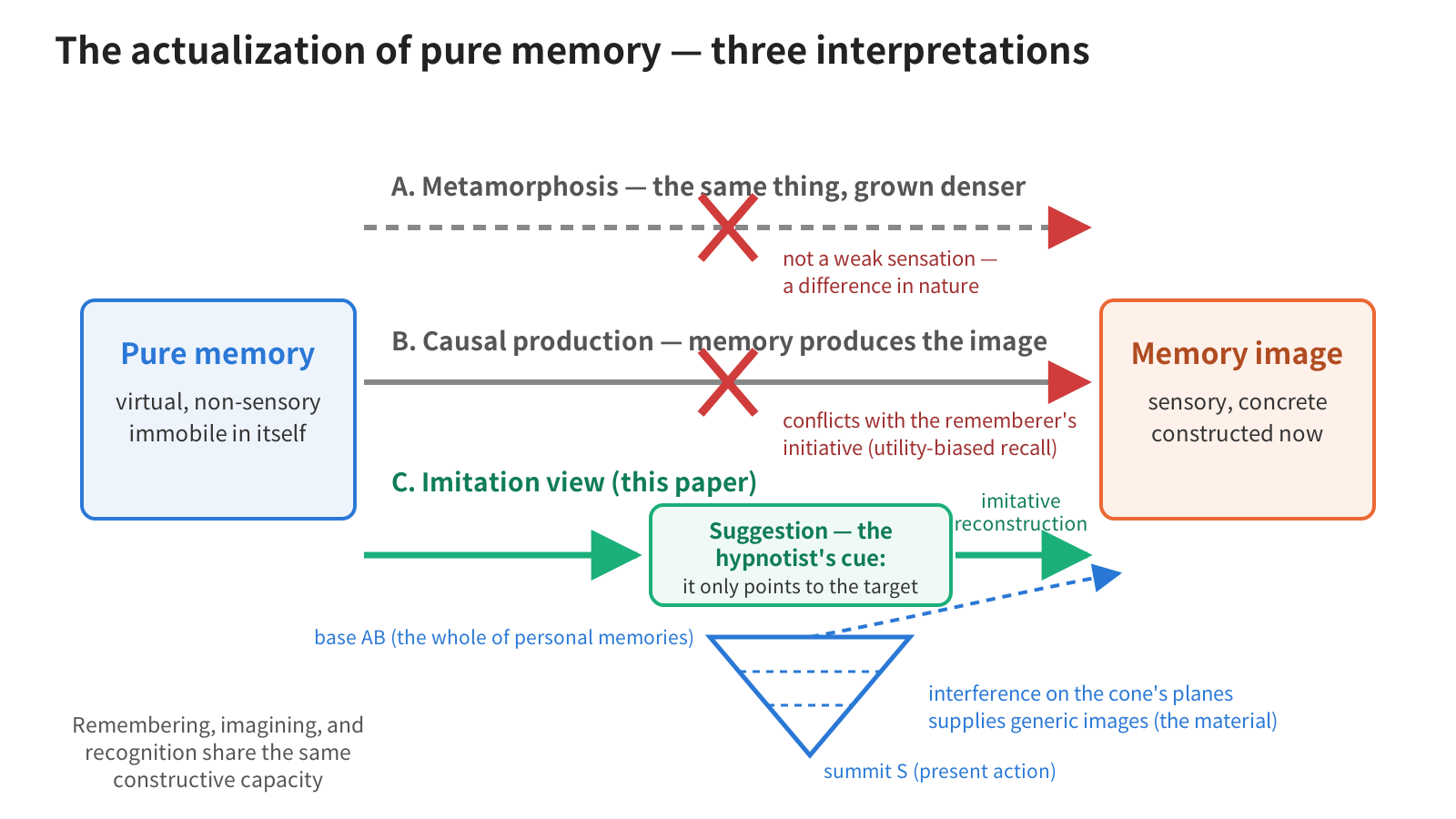
- The paper’s central proposal: the actualization of pure memory is neither a metamorphosis (the same thing growing denser) nor a causal production of the image by memory, but a suggestion-guided imitation — taking Bergson’s own metaphor of the hypnotist’s suggestion as the heart of the theory. Pure memory only indicates the target; the initiative of construction lies with the rememberer.
- The shared material of remembering, imagining, and recognition — generic images — is shown to be formed by the interference of memories on the planes of the memory cone: a Bergsonian counterpart to the episodic construction system.
- The comparison also puts a question back to simulationism: even if remembering without preservation of the individual episode is granted, can the general preservation that sustains generic images be dispensed with? Splitting the concept of preservation in two opens the next round of debate for both camps.
From Closure to Transformation: Bergsonian Dynamics of the Societal Landscape
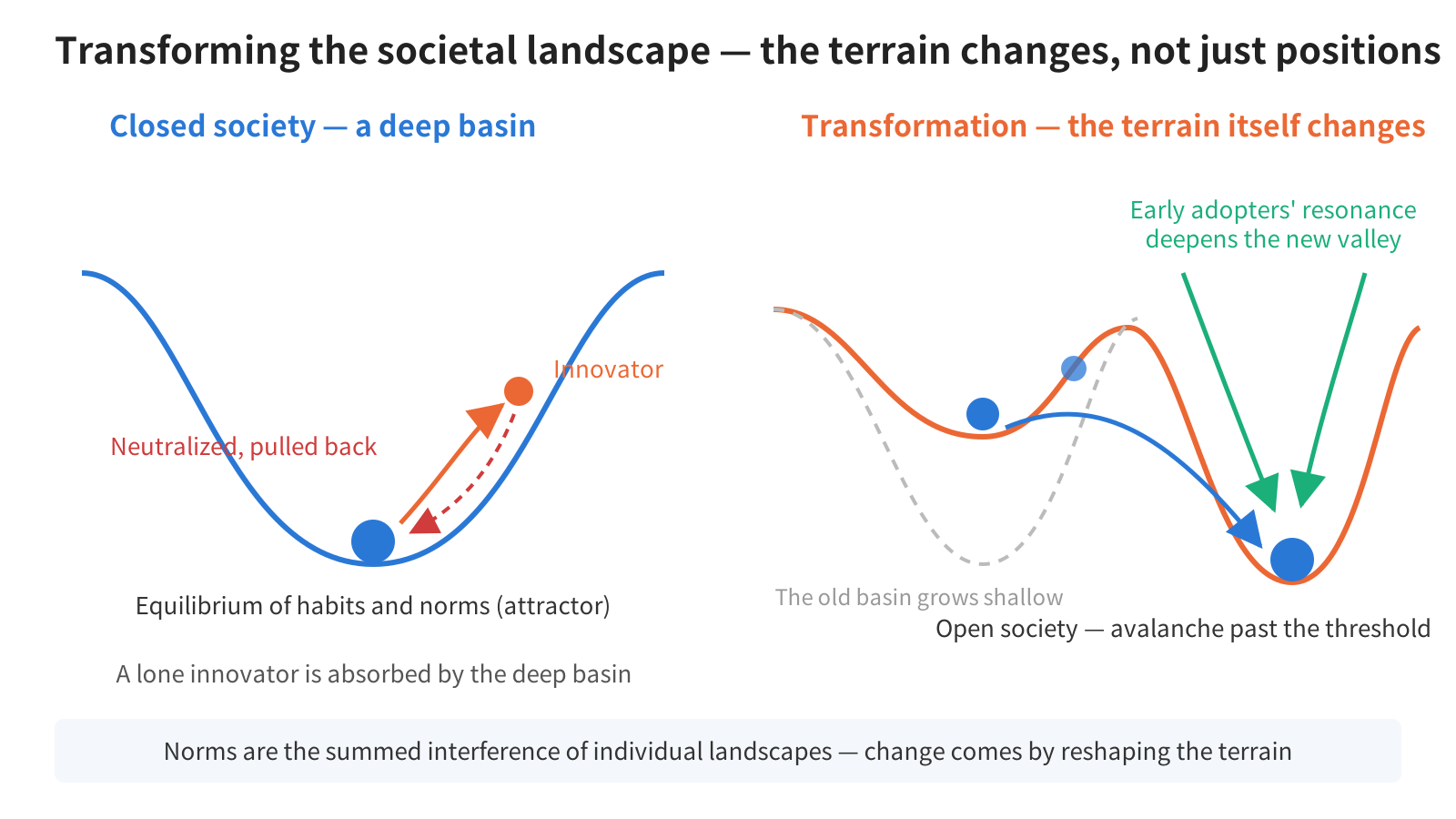
- The Two Sources of Morality and Religion has usually been read with the emphasis on the emergence of moral innovators — prophets and mystics. But an innovator alone does not change a society: the inertia of established norms neutralizes isolated deviation. The paper reconstructs, from Bergson’s text, the neglected structure of propagation.
- It first reads the closed society as an automatic equilibrium (attractor) woven from the interactions of its members, placing the robustness of custom on the same field as the theory of convention since Lewis and evolutionary game theory (O’Connor and others).
- Two questions are then answered. Resonance in early adopters is explained as the de-neutralization of deep memories that had persisted, submerged by interference, until the innovator triggers them. Society-wide diffusion is explained through the concept of the societal landscape, built from Bergson’s theories of perception and evolution: transformation is a reshaping of the terrain of possibilities, not a movement of individuals across it.
- A contemporary reconstruction of Bergson’s social philosophy — a single dynamics running from the stability of norms to their overturning — that also connects to the System 0/1/2/3 framework of collective cognition.
System 0/1/2/3: Quad-Process Theory for Multitimescale Embodied Collective Cognitive Systems
Co-authored with Tadahiro Taniguchi and colleagues in AI and robotics
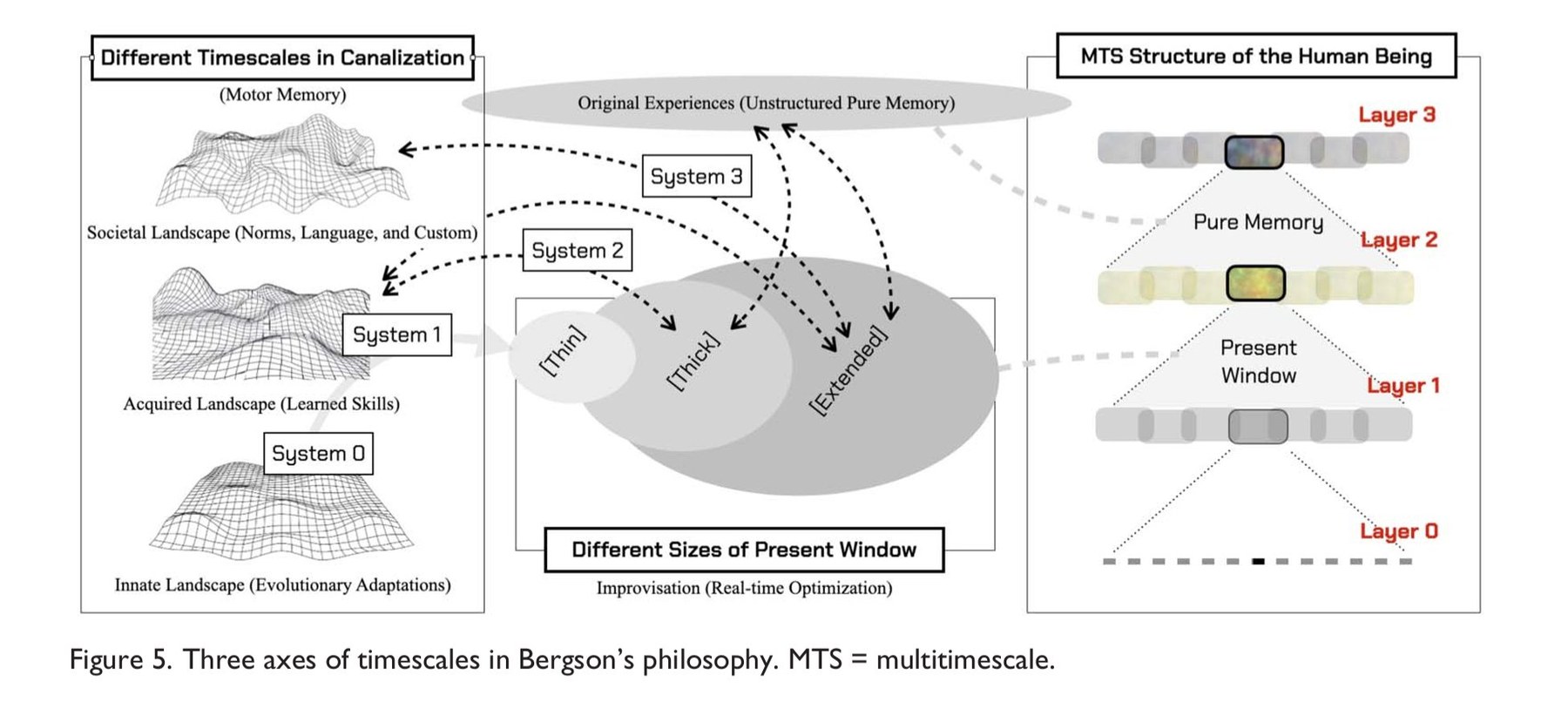 Figure: Taniguchi et al. 2025, Figure 5 (CC BY 4.0)
- Cognitive science has long explained thinking with a dual-process model: fast intuition (System 1) and slow deliberation (System 2). This paper adds the bodily and material processes below them (System 0) and the collective, socio-cultural processes above them (System 3), proposing a quad-process theory.
- The theoretical backbone of the extension is the multi-timescale (MTS) interpretation of Bergson’s philosophy of time: the layered structure of durée, redeployed as a design scheme for cognitive systems (Figure 5).
- The payoff is a single picture in which everything from physical behavior through habit and deliberation to norms and institutions appears as the workings of different temporal layers.
- A case of the history of philosophy feeding directly into theory-building in contemporary AI and cognitive science.
Does Time Have a Speed? Time Qualia and Bergson’s Durée
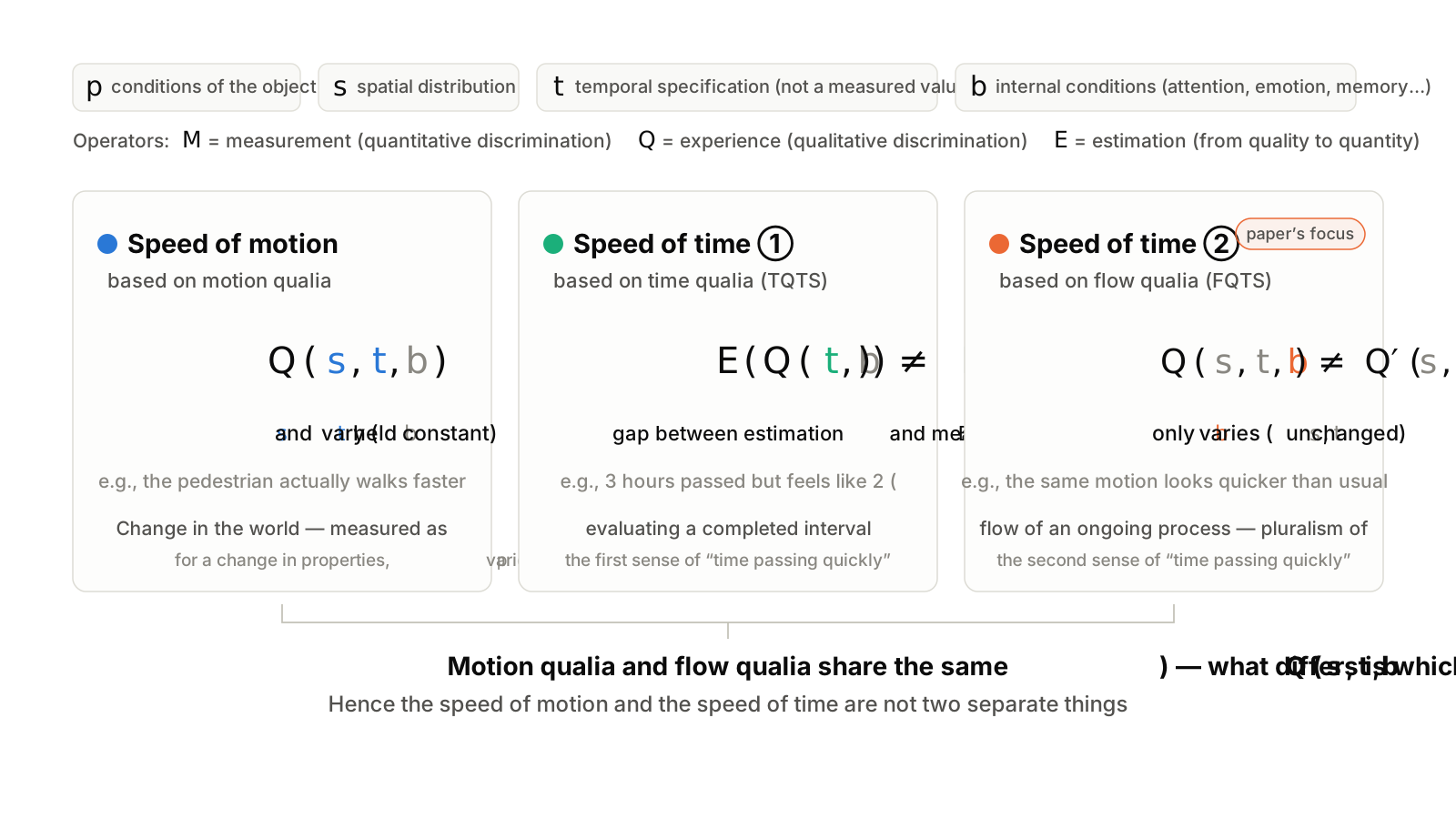
- Philosophy of time has long dismissed the question of time’s own speed as meaningless — time passes at one second per second, which is no rate at all. The paper confronts this verdict head-on.
- It distinguishes measurement (M) and experience (Q) as two operations mapping a shared input into different spaces of discrimination, and formulates the qualitative component of temporal experience, irreducible to measured quantity, as time qualia.
- On this basis, “time passing quickly” turns out to have two senses: the gap between estimated and measured duration (TQTS), and the felt pace of an ongoing flow (FQTS). The latter yields the conclusion that the speed of motion and the speed of time are not two separate things — turning Bergson’s pluralism of durée into a working tool for the contemporary philosophy of time.
Memory as the Origin of the Past: A Developmental and Conceptual Refinement of the Dependency Thesis
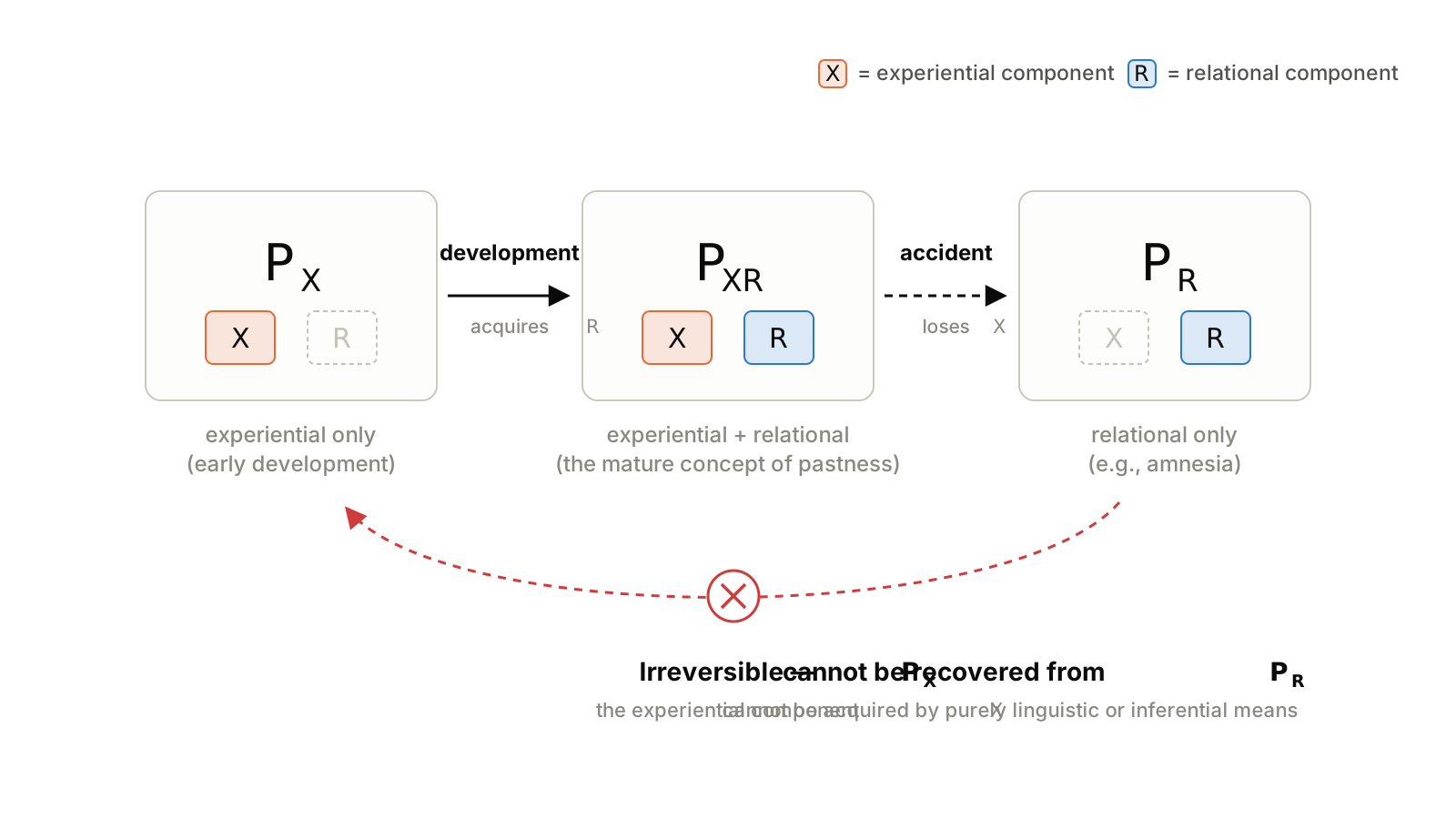
- Where does the very idea of the past — yesterday, last year — come from? The dependency thesis says episodic memory is its origin; objections from amnesia cases and the like have kept piling up.
- Instead of defending the thesis as a monolith, the paper decomposes it: the concept of pastness is analyzed as a hybrid of an experiential component and a relational component, and the developmental stages at which each is acquired are teased apart.
- The decomposition shows that the standing counterexamples each target a different component at a different stage, leaving the core of the thesis untouched.
- A contribution to the analytic philosophy of memory, joining conceptual analysis with developmental psychology.